
Branded Reflective Gear for Construction Companies: The Complete Australian Guide
Discover how Australian construction companies can use branded reflective gear to boost safety, team identity, and brand visibility on every job site.

Written by
Patrick Lee
Safety & Workwear
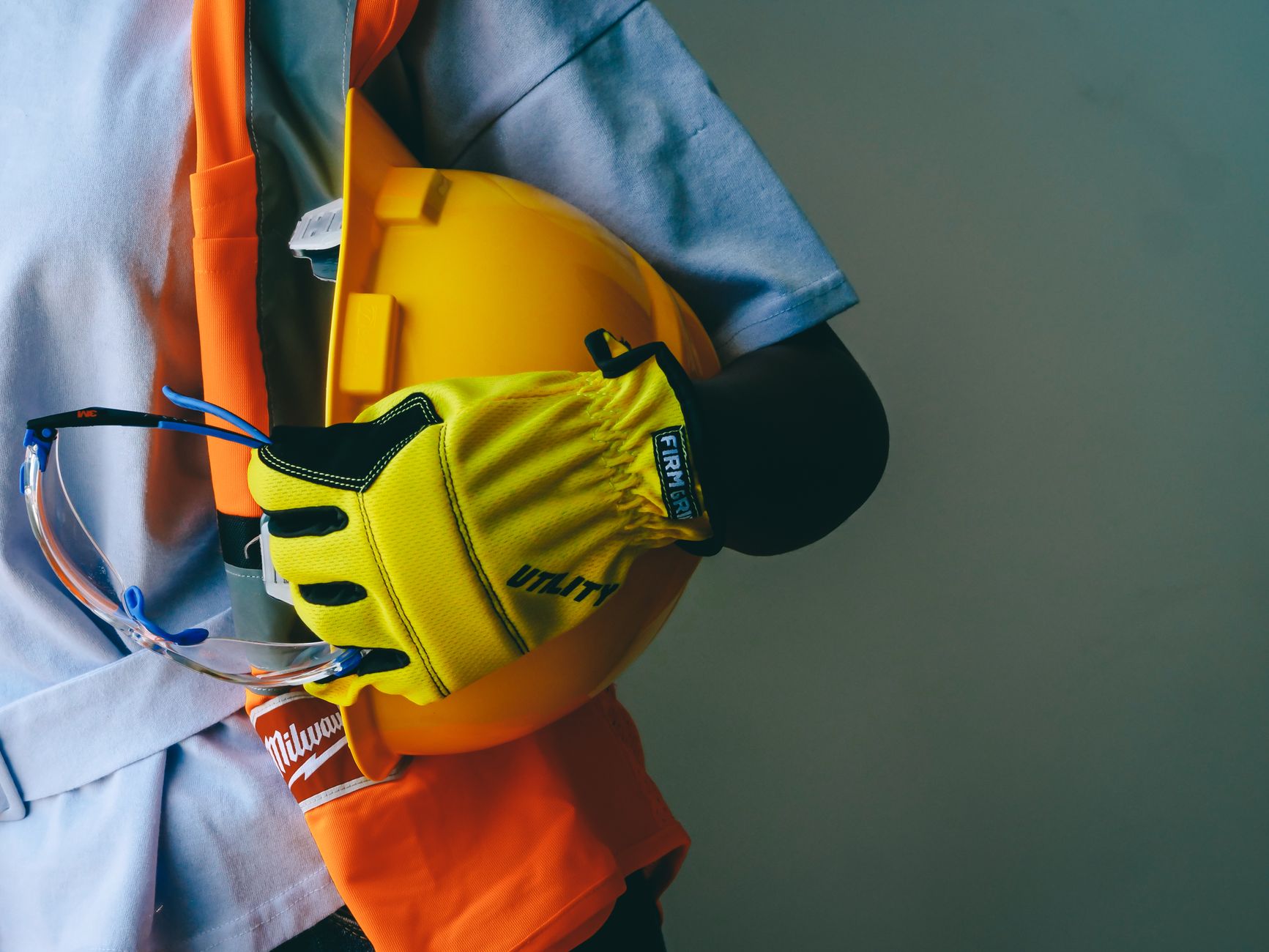
When you’re running a construction business in Australia, visibility is everything — and not just in the figurative sense. Whether your crew is working on a high-rise in Sydney’s CBD, a highway project in regional Queensland, or a civil works contract in Perth’s outer suburbs, keeping workers safe and instantly identifiable is a non-negotiable. Branded reflective gear for construction companies in Australia sits at the intersection of workplace compliance, team identity, and smart brand marketing. Done well, it’s one of the most practical investments a construction business can make — gear that earns its keep every single day, in every weather condition, on every site.
Why Branded Reflective Gear Matters for Australian Construction Sites
Australia’s construction industry operates under some of the most stringent workplace health and safety regulations in the world. Safe Work Australia mandates the use of high-visibility clothing in environments where workers are exposed to vehicles, plant equipment, or low-light conditions. But beyond simple compliance, branded hi-vis workwear does something no safety sign or induction video can do: it builds a culture of professionalism and belonging.
When your workers arrive on site wearing clean, well-branded gear, the message is immediate. Subcontractors know who they’re dealing with. Site managers can spot your crew at a glance. And clients doing a walkthrough? They see a business that takes itself seriously.
It’s also worth understanding the commercial visibility angle. A crew of 20 workers in branded hi-vis moving around a busy build creates thousands of impressions daily — from passing motorists to site visitors to social media photos. That’s a form of promotional positioning that’s genuinely hard to replicate with most other marketing spend.
Understanding AS/NZS 4602 Standards and What They Mean for Your Order
Before diving into product selection and decoration methods, it’s critical to understand the compliance landscape. Hi-vis workwear in Australia must conform to AS/NZS 4602.1:2011, the standard that governs the design requirements for high-visibility safety garments. Products are classified into two categories:
- Class D (Day): Garments designed for use in daylight conditions with fluorescent fabric only
- Class D/N (Day/Night): Garments combining fluorescent background material with retro-reflective tape, suitable for both day and night use
Most construction sites require Class D/N garments, particularly when workers are exposed to vehicle or plant traffic at any time of day or night. When ordering branded reflective gear, always confirm with your supplier that the garments carry the correct AS/NZS certification. Non-compliant gear won’t just fail an audit — it could expose your business to serious liability.
Choosing the Right Garment Type
The most common hi-vis garments for construction sites include:
- Polo shirts with reflective tape: Great for warmer climates like Darwin, Cairns, or Brisbane where workers need breathable fabric during summer months. These pair well with embroidered or printed logos.
- Long-sleeve shirts: Preferred in cooler southern states like Victoria and Tasmania, or for workers with sun exposure concerns.
- Vests: A cost-effective option often used for visitors, short-term contractors, or site inductions. Easy to pull over regular workwear.
- Jackets and hoodies: Essential for construction crews in Melbourne, Adelaide, or Canberra where temperatures can drop sharply, particularly during winter months.
- Cargo pants and shorts: Coordinating the full uniform with compliant bottoms reinforces the professional image.
If you’re interested in how different shirt styles fit into a broader uniform strategy, our breakdown of different types of shirts and their applications is a useful starting point.
Decoration Methods for Hi-Vis Workwear
Branding reflective gear comes with specific technical considerations. The presence of reflective tape and fluorescent fabric means not every decoration method is suitable. Here’s what works best:
Embroidery
Embroidery is the gold standard for hi-vis workwear decoration. It’s durable, it withstands repeated industrial washing, and it holds up on the heavy-duty fabrics typically used in compliant garments. A chest logo on a hi-vis polo shirt, or a company name across the back of a vest, looks crisp and professional when embroidered well. The main limitation is detail — very fine logos with thin lines or small text don’t always translate well to thread, so you may need to simplify artwork slightly.
Screen Printing
Screen printing works well on the flatter fabric sections of hi-vis garments, though it’s less suitable for areas directly adjacent to reflective tape due to heat and adhesion issues. For large back prints with company names and contact details, screen printing can be very effective and cost-efficient at scale. If you’re comparing decoration methods more broadly, our guide to custom shirts and t-shirts covers this in more detail.
Heat Transfer
Heat transfer printing has improved dramatically in recent years and is increasingly used for hi-vis workwear. It allows for more complex, full-colour branding without the minimum order quantities sometimes associated with screen printing. However, longevity can be a concern with industrial washing, so ensure the transfer material is rated for workwear applications.
Transfer Printing and Digital Print
For smaller runs or complex logos with multiple colours, digital print transfers offer flexibility. These are particularly useful when you have subcontractor crews who need garments quickly with company-specific branding. Keep in mind that colour psychology matters in brand recognition — choosing the right contrast between your brand colours and the hi-vis yellow or orange background is important for both aesthetics and legibility.
Budgeting for Branded Reflective Gear: What to Expect in 2026
Budget planning is one of the most common challenges construction businesses face when ordering workwear. Costs vary significantly depending on garment quality, quantity, number of decoration locations, and turnaround time.
Typical price ranges (2026 market):
- Hi-vis polo shirts with one embroidered logo: $25–$45 per unit at standard quantities (24–50 units)
- Hi-vis long-sleeve shirts with front and back decoration: $35–$60 per unit
- Hi-vis vests (basic): $12–$25 per unit
- Hi-vis jackets with embroidery: $60–$120 per unit
Ordering in bulk will always bring unit costs down significantly. A construction company in Brisbane ordering 100 hi-vis polos will pay considerably less per shirt than one ordering 15. If you’re sourcing in larger volumes, it’s worth exploring wholesale promotional products options to understand how tiered pricing works.
Setup fees are another consideration. Screen printing and embroidery both typically involve a one-time setup or digitising fee. For embroidery, expect to pay $25–$60 for logo digitisation, though this is usually a one-off cost you can reuse across future orders.
Turnaround Times
Standard turnaround for branded hi-vis workwear in Australia is typically 10–15 business days from artwork approval. Rush orders (5–7 business days) are available but often attract a surcharge. If you’re ordering for a contract start date, allow generous lead time — fabric shortages and decoration capacity can cause delays, particularly in the lead-up to summer when workwear demand peaks.
Practical Tips for Ordering Branded Reflective Gear
Getting the ordering process right saves time, money, and frustration. Here are some key recommendations:
Audit your current workwear first. Before placing a new order, assess what garments are still compliant, what’s worn out, and what sizing gaps exist across your workforce. This avoids over-ordering in some sizes while running short in others.
Order samples before committing. For significant orders, always request a sample or pre-production proof. Colour variation between screens and physical fabric is common, and a physical sample lets you check garment quality, sizing, and logo placement before you commit to a full run.
Consider a complete uniform package. Branded reflective gear works best as part of a cohesive uniform strategy. Combining hi-vis shirts with branded caps, safety boots, and accessories creates a more polished, professional presentation on site. This also ties into the broader impact of workplace merchandise on company culture — a complete, consistent look reinforces team identity in a tangible way.
Plan for growth. If you’re a growing business, order slightly more than you need. Reordering small quantities later is always more expensive than including extra units in your initial run.
Think beyond the worksite. Branded hi-vis polo shirts are perfectly appropriate for trade shows, expos, and industry events. If your team is exhibiting at a construction industry expo in Sydney or Adelaide, showing up in smart, well-branded hi-vis tells a story about your business without a single word.
Eco-Friendly Options for Reflective Workwear
Sustainability is increasingly on the radar for construction companies, particularly those tendering for government contracts or large commercial projects where environmental policies matter. There is a growing range of hi-vis garments made from recycled polyester or other sustainable materials that still meet AS/NZS 4602 standards.
If your business has a broader commitment to sustainable procurement, it’s worth exploring how upcycled and recycled material merchandise fits into your overall branding strategy. Some suppliers now offer hi-vis shirts made partially or wholly from recycled PET — a nice story to tell on a government tender, and a genuine commitment to reducing your environmental footprint. Similarly, if you’re outfitting a broader team with bags or accessories, recycled PET custom backpacks offer a great companion product for site supervisors or project managers.
Rounding Out Your Brand Presence Beyond Workwear
Branded reflective gear is the centrepiece of a construction company’s promotional identity, but it doesn’t stand alone. Construction businesses often find value in complementary branded items that extend their presence off-site:
- Branded signage and site boards — check out what’s available for signage in Brisbane and other major centres
- Custom stubby holders — popular for end-of-project celebrations or client gifts. See our guide to custom stubby holders
- Branded stationery for site offices and project documentation. Our overview of stationery options covers what’s available
- Power banks and tech accessories for site supervisors and project managers — particularly useful for remote or regional sites. Our guide to promotional power banks in Brisbane is worth a read
Understanding how branded merchandise influences buying behaviour and perception is also valuable — the research on promotional products and consumer behaviour provides useful context on why these items work.
Conclusion: Key Takeaways for Construction Companies Ordering Branded Reflective Gear
Branded reflective gear for construction companies in Australia is far more than a compliance checkbox. When approached strategically, it’s a powerful tool for building team culture, creating professional credibility, and generating brand visibility on and off the job site.
Here are the key points to remember:
- Always confirm AS/NZS 4602.1:2011 compliance before ordering — non-compliant gear creates legal and safety risk
- Choose the right garment type for your climate — crews in Darwin need different options to those in Melbourne or Hobart
- Embroidery is the most durable decoration method for heavy-use workwear, but screen printing and heat transfer are valid for specific applications
- Budget for setup fees and allow adequate lead time — rushed orders cost more and can compromise quality
- Treat hi-vis workwear as part of a broader brand strategy, not just a safety requirement — the visibility your crew creates every day is genuine marketing value
Investing in quality branded reflective gear sets your construction business apart, keeps your team safe, and puts your brand in front of thousands of eyes every single day.